Carbon Notes #1: [A0] Pre-construction
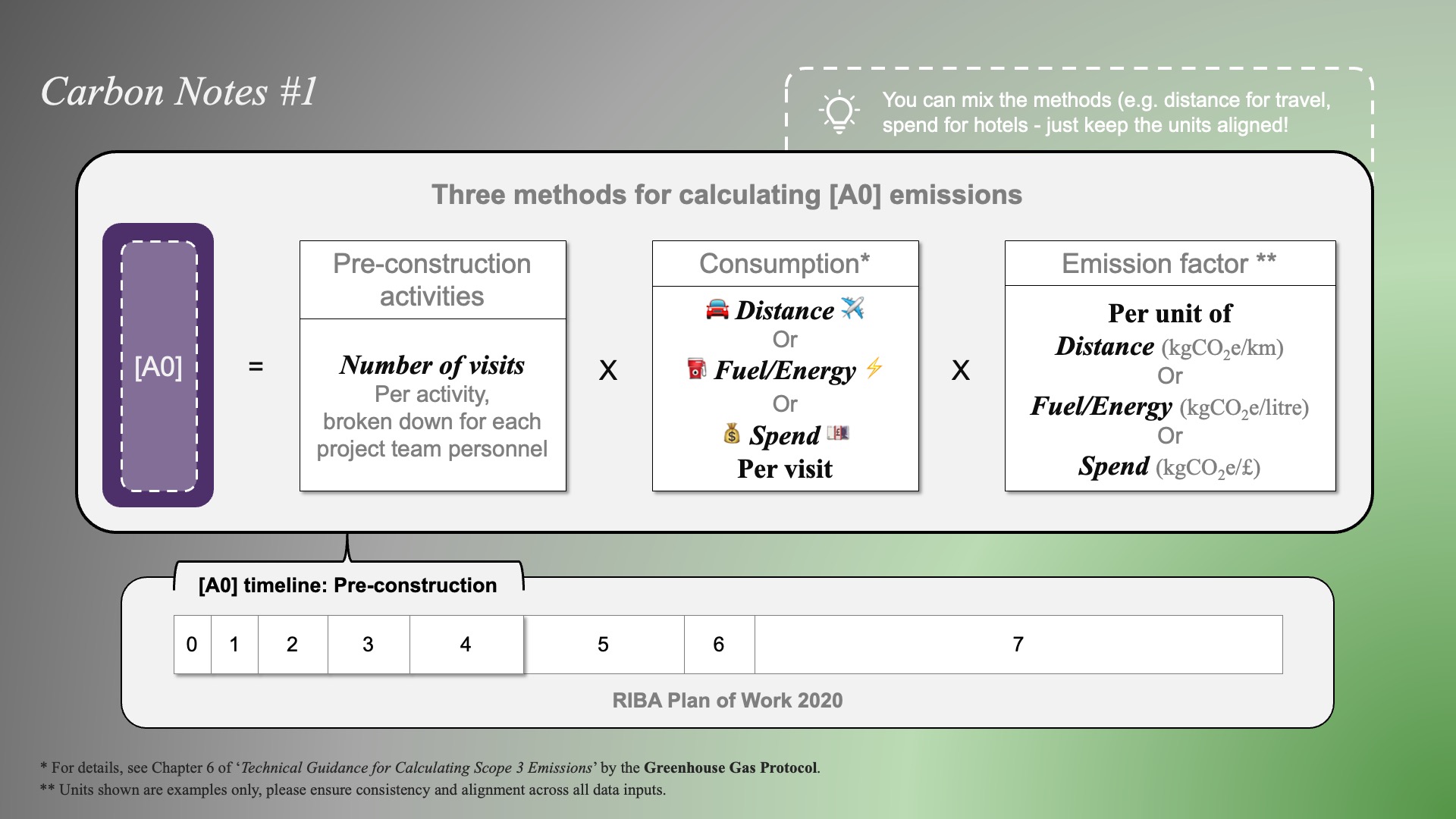
[A0] is a new module introduced in the 2nd edition of RICS WLCA standard. It commences when the client commits to a project through to when the contractor occupies the site - typically from RIBA Work Stage 0 to Stage 4 (inclusive).
The module is assumed to have low carbon emissions. However, there isn’t sufficient evidence to confirm that it contributes only a small percentage to the overall assessment. In reality, its impact depends on project type, site logistics, and consultant coordination.
📏 Scope & Extent
The pre-construction assessment is limited to activities that require travel, attendance on site and equipment necessary for the site only. A proforma list of designers, specialists and consultants can help record those activities exclusive to the site.
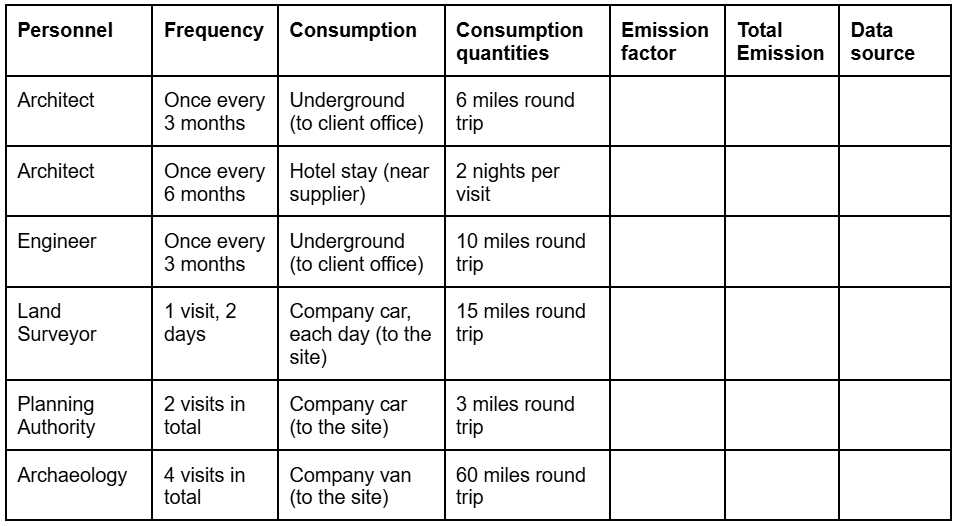
- 📌 Exclusivity of activities: Activities that do not require travel away from the office do not need to be recorded (e.g. the architect’s daily commute).
- 📌 Travel distance: Travel assessments are based on door-to-door distance to and from the location away from their workplace, considering all transportation modes and overnight stays (incl. travel to and from the site to the hotel). Accommodation emissions should also be assessed, excluding catering expenses.
📊 Data sources
- Initial assumptions can be based on consultant input or past project experience.
- Emission factors for projects in the UK can be sourced from GOV.UK. Be careful with using the correct units for calculation here - gCO₂e/km, gCO₂e/mile, kgCO₂e/tonne.km, etc.
- Records: As a project progresses, records of what, how and when each activity took place should be requested from the consultants.
📝 Assessment methods
- Increasing granularity: The pre-construction assessment starts with a series of assumptions and estimations, but gradually the proforma list is to break down more activities under each personnel. Eventually [A0] will factually reflect the emissions from pre-construction activities specific to the site and the project.
- Fuel-, Distance-, and Spend-based methods: While distance-based calculation is the most common, there are alternative methods based on fuel and expenses. For more details, please see Chapter 6 of ‘Technical Guidance for Calculating Scope 3 Emissions’ by the Greenhouse Gas Protocol.
🏁 Conclusion
Even though reporting [A0] is optional, it should not be ignored. If a project is large and complex, it may require extensive coordination including project and site meetings, necessitating overnight stays and travels between offices and locations. On the other hand, a small-scale project that has buildings of historical significance might also require extensive surveys and consultations from the onset.
Clearly defining the site boundary and the scope of the pre-construction site set up is essential, and should be coordinated between the client, the project manager and the design team.